Málaga guides
Holy Week in Málaga 2027: a practical guide
For one week, central Málaga becomes a stage for the processions: huge floats carried on bearers' shoulders, marching bands, penitents in robes and streets packed until the small hours. Here's when it falls in 2027, how it works, where it goes and how to plan around it.
- 21–28 MarHoly Week 2027, Palm Sunday to Easter Sunday
- 25 & 26 MarMaundy Thursday and Good Friday, public holidays in Andalusia
- 1921Founding of Málaga's Agrupación de Cofradías
Source: Turespaña (spain.info), Málaga City Council and the Agrupación de Cofradías
What Holy Week in Málaga is
Málaga's Holy Week (Semana Santa) has been declared a Festival of International Tourist Interest. Each day, several brotherhoods (cofradías) leave their church or brotherhood house, process through their neighbourhood, join the official route in the centre and return home, sometimes many hours later.
They're coordinated by the Agrupación de Cofradías, founded in 1921, which publishes the times and routes each year and manages the seats on the official route. As of 14 October 2026 the 2027 schedule isn't out, so we use 2026 as a guide: routes change little, times do.
| Day | Date | Worth knowing |
|---|---|---|
| Palm Sunday | 21 March | First day; in 2026 the first procession set off in the morning. |
| Holy Monday | 22 March | Processions in the afternoon and evening. |
| Holy Tuesday | 23 March | Processions in the afternoon and evening. |
| Holy Wednesday | 24 March | Jesús «el Rico» frees a prisoner, a privilege tradition attributes to Charles III. |
| Maundy Thursday | 25 March | Public holiday. The Spanish Legion lands at the port and escorts the Christ of Mena, a tradition dating from 1930. |
| Good Friday | 26 March | Public holiday in Andalusia. |
| Easter Sunday | 28 March | The procession of the Risen Christ closes the week. |
Times and routes are published by the Agrupación de Cofradías before Holy Week.
How the processions and tronos work
In Málaga, the floats carrying the sacred images aren't called pasos but tronos. They hold Christ, the Virgin or scenes from the Passion, decked with flowers and candles, and are carried on the shoulders of the hombres de trono, members of each brotherhood.
In front walk the nazarenos, penitents in robes and tall pointed hoods, and marching bands usually follow. Many brotherhoods make a station of penance at the Cathedral.
They're long: in 2026 some set off in the early afternoon and returned after midnight. You don't need to see a whole one: pick a spot, watch the tronos go by and move on.
The official route
Each procession has its own route, but almost all share a stretch in the centre, the official route (recorrido oficial), where the Agrupación sets up seats and stands. On their way there, many pass along Calle Carretería, the Pasillo de Santa Isabel or Plaza de la Merced.
The shared stretch in 2026, in order
Plaza de la Constitución
With the main stand, where the official route begins.
Calle Larios
Lined with seats on both sides.
Martínez, Atarazanas and Torregorda
Short streets down to the Alameda.
Alameda Principal
The widest stretch.
Plaza de la Marina
By the port.
Molina Lario and the Cathedral
Up to the Cathedral's south tower.
2026 route, from the city council's mobility plan. Check it for 2027 once published.
Seats and stands
Watching from the street costs nothing. Seats and stands on the official route are allocated by the Agrupación through passes (abonos): the renewable pass covers the whole week and gives priority to the previous year's holders; the non-renewable one can be for the whole week or single days. If rain cancels a procession, its rules make no provision for refunds.
Crowds: tips for a good view
- Get there early: Calle Larios and Plaza de la Constitución fill up long before the procession arrives.
- For more room, try the Alameda Principal, the widest stretch.
- Crossing a procession can take a long time, so decide beforehand which side you'll move along.
- Bring water, comfortable shoes and a layer for the evening, and agree a meeting point in case you get separated.
Getting around during Holy Week
The council advises against driving that week. In 2026 it closed the Alameda Principal, the Paseo del Parque, Plaza de la Marina, Calle Córdoba and Boquete del Muelle from 15:00 on procession days, and continuously from Wednesday afternoon until the end of Good Friday.
| Transport | What happened in 2026 | Where to check |
|---|---|---|
| Bus (EMT) | During processions, stops on the Alameda and Paseo del Parque moved to Paseo de los Curas and Avenida Manuel Agustín Heredia. | EMT website and app |
| Cercanías train | Special trains on the C1; on the nights of Holy Wednesday and Maundy Thursday the last left Centro-Alameda at 2:50. | Renfe website |
| Taxi | Ranks on the route, such as Plaza de la Marina and Atarazanas, were suspended and temporary ones set up. | City council mobility plan |
| Car | Cars couldn't leave the Camas and Tejón y Rodríguez car parks while processions were passing. | City council mobility plan |
2026 information. The council publishes the 2027 plan before Holy Week.
Book early and choose your base well
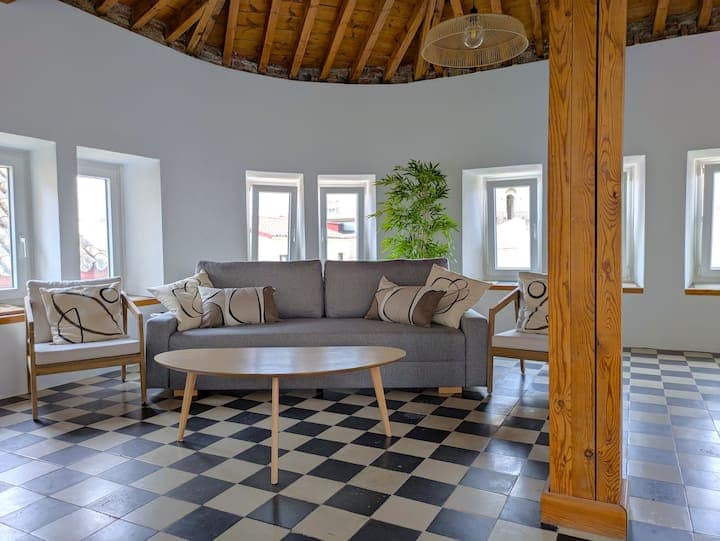
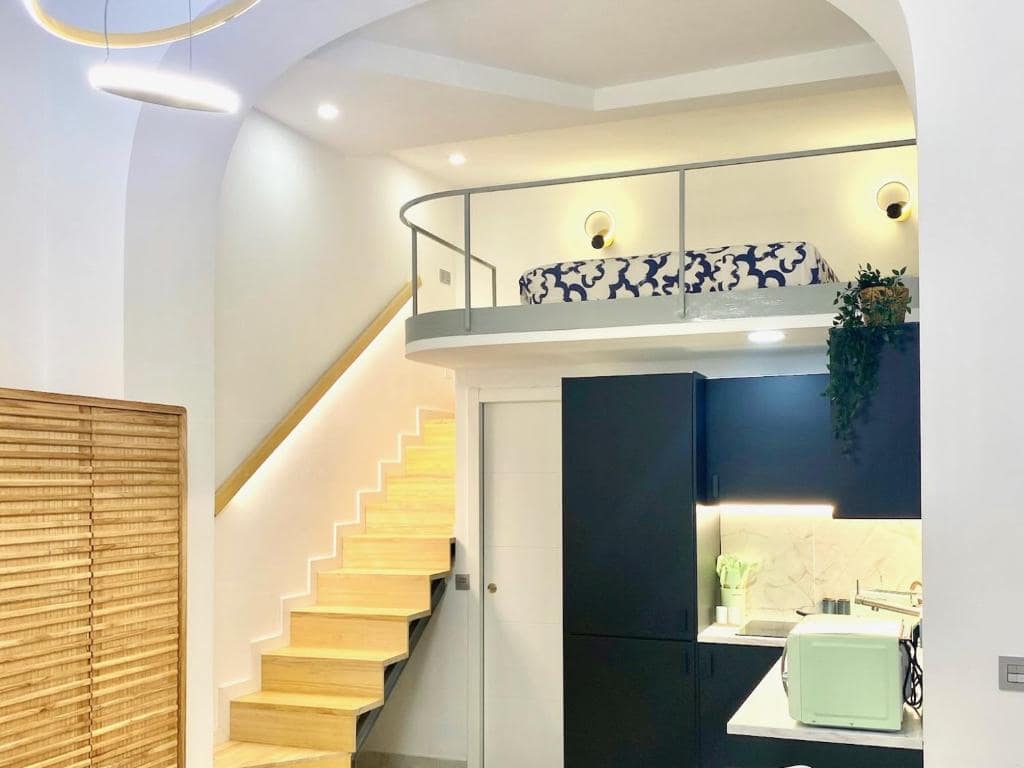
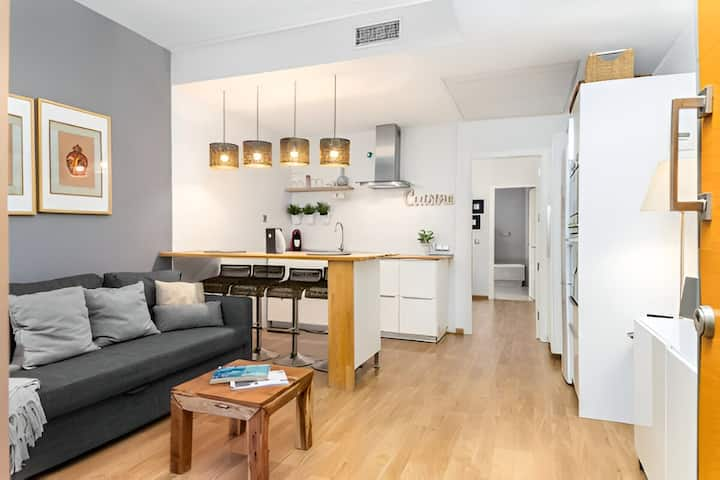
If you want to stay in the centre that week, book well ahead. Torre San Juan is about 2 minutes' walk from Plaza de la Constitución (approx.), though it's a 4th floor with no lift; Trinidad is about 7 and Museums Loft about 8 (approx.).
Processions pass through the neighbourhoods too: in 2026 they went along Calle Peña, Calle Trinidad and Calle Cuarteles. Watching from your doorstep is a treat, but it also means closed streets and big crowds.
Frequently asked questions
When is Holy Week in Málaga in 2027?
From Palm Sunday, 21 March, to Easter Sunday, 28 March. Maundy Thursday and Good Friday (25 and 26 March) are public holidays in Andalusia.
Where's the best place to see the processions?
Almost all of them pass along the official route: Plaza de la Constitución, Calle Larios, the Alameda Principal and Plaza de la Marina. To see them leave or return, check each brotherhood's route and head to its neighbourhood.
Do I need a ticket to watch?
Not to watch from the street. Seats and stands on the official route are allocated through passes from the Agrupación de Cofradías.
When are the 2027 times published?
The Agrupación de Cofradías publishes them before Holy Week, and the city council includes them in its mobility plan. As of 14 October 2026 they weren't yet available.
Can I drive around the centre that week?
It's not a good idea: the council closes streets in the centre during processions and recommends public transport. If you come by car, park it on arrival and leave it.